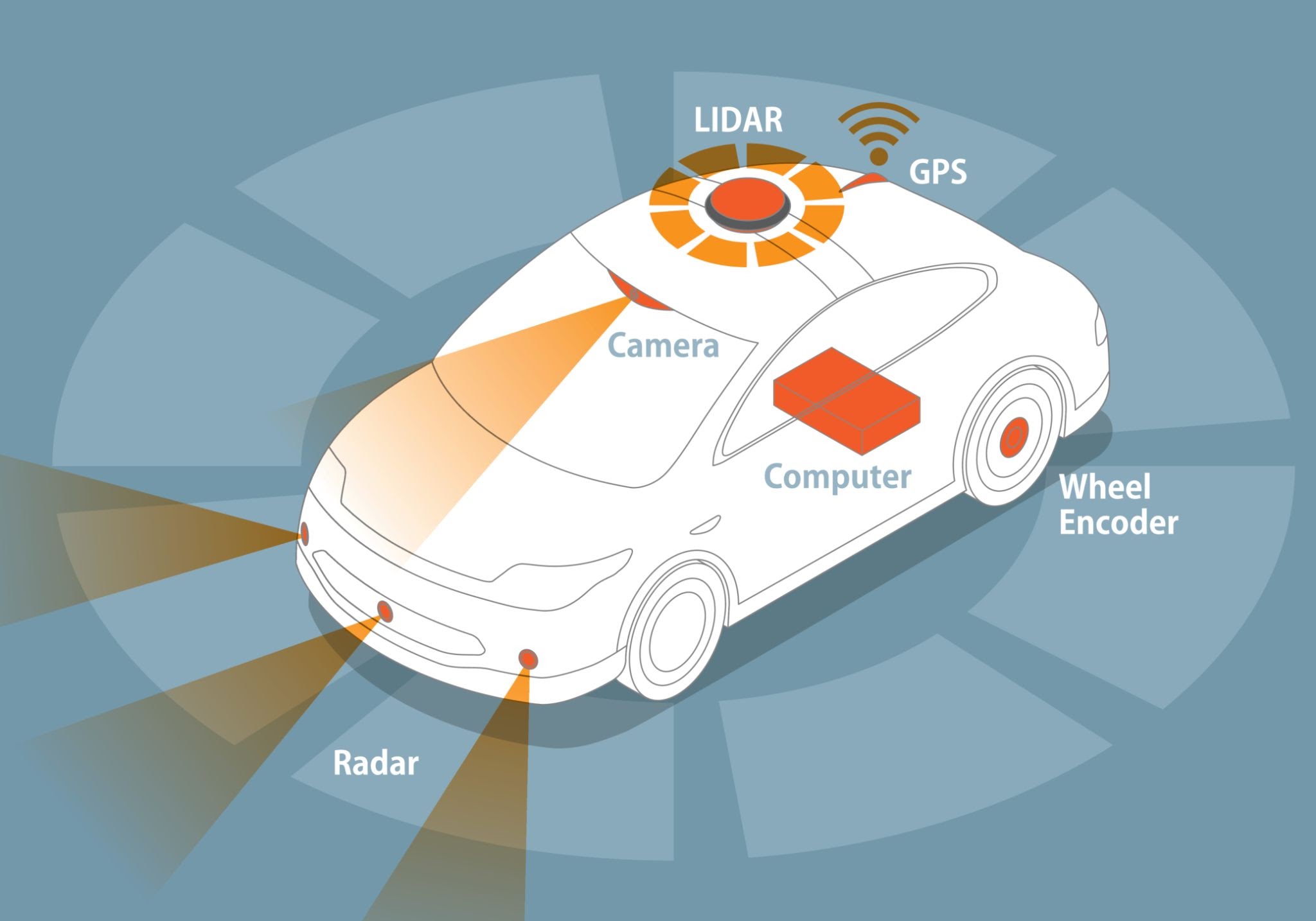
Sensor technology is the bedrock of the modern world, acting as the "nervous system" for our machines and environments. At its simplest, a sensor is a device that detects changes in physical properties (like heat, light, or motion) and converts them into signals that can be read by an observer or an instrument.
Sensor history is a journey from bulky mechanical switches to invisible, intelligent "dust."
In the early 20th century, sensors were primarily analog and mechanical.
Thermocouples and Resistance Temperature Detectors (RTDs) became standard for industrial heating.
The Photoelectric Cell (1900s): Einstein’s work on the photoelectric effect paved the way for sensors that could "see" light.
RADAR (1930s): Developed for military use, this used radio waves to detect objects—a precursor to modern autonomous sensing.
The invention of the transistor changed everything.
Silicon Sensors: Researchers discovered that silicon’s electrical properties change under pressure or temperature.
Infrared (IR) Sensors: Developed during the Cold War for missile guidance and later adapted for non-contact thermometers.
The CCD (1969): The Charge-Coupled Device allowed for digital imaging, the ancestor of your smartphone camera.
This era introduced Micro-Electro-Mechanical Systems (MEMS). Engineers learned how to etch tiny mechanical structures directly onto silicon chips.
Airbags: MEMS accelerometers became cheap enough to put in every car.
Smartphones: The 2000s saw the integration of GPS, gyroscopes, and proximity sensors into handheld devices.
Today, sensors are no longer just "dumb" collectors; they are Smart Sensors that process data locally.
IoT (Internet of Things): Billions of sensors now talk to each other globally.
Biometric Sensing: Wearables now track blood oxygen ($SpO_2$), ECG, and even glucose levels non-invasively.
Autonomous Systems (2020s): LiDAR and high-def radar allow cars and drones to navigate complex environments in real-time.
Quantum Sensors (2026): We are currently seeing the emergence of quantum sensors that can detect minute gravitational changes or magnetic fields at an atomic level.
While thousands of specialized sensors exist, here is an alphabetical list of the most prominent types used across industries:
| Letter | Sensor Name | Primary Use |
| A | Accelerometer | Measures acceleration and tilt (used in phones/airbags). |
| B | Barometer | Measures atmospheric pressure for weather/altitude. |
| C | Capacitive Touch | Detects human touch on screens. |
| D | Dosimeter | Measures exposure to ionizing radiation. |
| E | Encephalograph (EEG) | Detects electrical activity in the brain. |
| F | Flow Sensor | Measures the rate of liquid or gas movement. |
| G | Gyroscope | Maintains orientation and angular velocity. |
| H | Hygrometer | Measures humidity or moisture content in the air. |
| I | Inductive Proximity | Detects metal objects without physical contact. |
| J | Junction Temperature | Measures the heat at a semiconductor junction. |
| K | Knock Sensor | Detects engine vibration/detonation in cars. |
| L | LiDAR | Uses light pulses to create 3D maps of surroundings. |
| M | Magnetometer | Measures magnetic fields (digital compass). |
| N | NQR (Nuclear Quadrupole Resonance) | Detects specific chemicals (explosives/drugs). |
| O | Optical Sensor | Converts light rays into electronic signals. |
| P | Piezoelectric Sensor | Converts pressure or strain into electrical voltage. |
| Q | Quantum Gravimeter | Measures ultra-precise changes in gravity. |
| R | Radar | Uses radio waves to determine range and velocity. |
| S | Spectrometer | Analyzes the properties of light to identify materials. |
| T | Thermistor | A resistor whose resistance changes with temperature. |
| U | Ultrasonic Sensor | Uses sound waves to measure distance. |
| V | Viscometer | Measures the viscosity (thickness) of fluids. |
| W | WFS (Wavefront Sensor) | Measures aberrations in an optical signal. |
| X | X-Ray Sensor | Captures high-energy electromagnetic radiation. |
| Y | Yaw Rate Sensor | Measures a vehicle's angular velocity around its vertical axis. |
| Z | Zero-Speed Sensor | Detects when a rotating shaft has come to a full stop. |
In 2026, the focus has shifted from "collecting data" to "Edge Intelligence." This means the sensor doesn't just send a raw signal to a computer; it interprets the signal itself, saving energy and bandwidth.
This structure covers the physics, applications, history, and future of sensing technology to give you a truly comprehensive overview.
Fundamental Physics & Mechanisms
At their core, sensors rely on the laws of physics to convert energy from one form to another.
-
Transduction: The process of converting a physical quantity (temp, pressure) into an electrical signal.
-
Piezoresistivity: How materials change electrical resistance under mechanical strain.
-
The Hall Effect: Used to measure magnetic fields by detecting voltage differences across a conductor.
-
Seebeck Effect: The basis for thermocouples, where temperature gradients create voltage.
-
Capacitance: Measuring changes in electrical storage (used in touchscreens and grain moisture sensors).
-
Time-of-Flight (ToF): Measuring the time a signal (light/sound) takes to bounce back to calculate distance.
The Global Sensor Taxonomy
Sensors are classified by what they detect and how they operate.
-
Active vs. Passive: Active sensors (Radar) emit energy; passive sensors (Infrared) simply receive it.
-
Analog vs. Digital: Analog provides a continuous signal; digital provides discrete "steps" (0s and 1s).
-
Proximity Sensors: Inductive (metal), Capacitive (non-metal), and Photoelectric (light-based).
-
Environmental Sensors: Measuring $CO_2$ levels, Particulate Matter (PM2.5), and Volatile Organic Compounds (VOCs).
-
Chemical Sensors: pH sensors, electrochemical gas sensors, and "Electronic Tongues" for liquid analysis.
Industrial & Automotive Applications
The "backbone" of the global economy relies on sensor feedback loops.
-
IIoT (Industrial IoT): Predictive maintenance sensors detect motor vibrations before a machine fails.
-
Automotive Safety: ABS (Anti-lock Braking) uses wheel speed sensors; Airbags use MEMS accelerometers.
-
ADSA (Driver Assistance): LiDAR, Radar, and Ultrasonic sensors create a 360° safety cocoon.
-
Robotics: Tactile sensors (e-skin) allow robots to handle delicate objects like eggs or glass.
Medical & Bio-Sensing
The frontier of healthcare is moving from the lab to the body.
-
Wearables: Photoplethysmography (PPG) uses green light to measure heart rate through the skin.
-
Pulse Oximetry: Measures $SpO_2$ by comparing the absorption of red and infrared light in the blood.
-
Glucose Monitoring: Continuous sensors (CGMs) use enzymes to measure sugar levels in interstitial fluid.
-
Implantables: Smart pacemakers that adjust heart rate based on physical activity sensors.
Emerging Technologies & 2026 Frontiers
The current state-of-the-art involves AI integration and quantum mechanics.
-
Edge AI: Sensors that process data on-chip to reduce latency and improve privacy.
-
Quantum Sensing: Using atoms to detect magnetic fields so small they can map individual neurons.
-
Smart Dust: Microscopic sensor nodes (MEMS) that can be dispersed to monitor large environments.
-
Energy Harvesting: Sensors that power themselves using ambient light, heat, or vibration.
-
Soft Sensors: Flexible, stretchable electronics for "smart clothing" and sports performance.
-
Neuralink & BCIs: High-density electrode arrays acting as sensors for direct brain-to-computer communication.
Key Performance Metrics
To evaluate any sensor in the list above, engineers look at these 5 critical specs:
-
Sensitivity: The minimum change the sensor can detect.
-
Linearity: How closely the output follows the input in a straight line.
-
Hysteresis: The difference in readings when approaching a value from above vs. below.
-
Resolution: The smallest increment the sensor can report.
-
Drift: How much the accuracy degrades over time or with temperature changes.